


One permanent hotel ID
Every hotel gets a CS ID that is never reused. If two IDs turn out to be the same hotel, they are merged and the old ID points to the new one.

Hotel Multicodes and Mapping
One hotel. One ID. Every supplier code.
Suppliers name and number the same property differently. Corvix gives it one permanent ID and links the code each supplier uses, so search results show it once and you can look up its code at any of them.
Corvix statistics
From the supplier statistics database (fetched 2026-11-05). These are industry figures, not Corvix's own counts. Switch between suppliers below: the four loaded in Corvix also show their real record counts.
Hotel codes mapped per supplier
 Amadeus
21,434,265
 Jumbo Tours
4,248,387
 Hotelston
4,185,648
 BCD Travel
4,070,162
 Babylon Holiday
3,130,998
 Emviagem
2,728,323
 NordBeds
2,313,451
 Magic Holidays
2,279,854
How it works
From a supplier's raw hotel data to one permanent ID, with the people and rules that keep it right.
Four suppliers, four versions
 Grand Bosphorus HotelGrand Bosphorus Hotel
HB-4821
CS1048213
 Hotel Grand BosphorusGrand Bosphorus Hotel
WB-90317
CS1048213
 GRAND BOSPHORUS HTLGrand Bosphorus Hotel
TBO-77124
CS1048213
 The Grand BosphorusGrand Bosphorus Hotel
RH-grand_bosphorus
CS1048213

Step 1 of 6
Each supplier sends its hotels in its own format. Corvix loads them as they are, then standardises names, addresses, phones, websites and coordinates so they can be compared.
Step 2 of 6
Hotels can only be the same hotel in the same place. Supplier cities are matched first, and each city gets one ID with every supplier's city code.
Step 3 of 6
Each supplier hotel is compared with nearby hotels. Name, location, address, postal code and phone are weighed into one score from 0 to 100.
Step 4 of 6
The score decides. High scores link automatically, doubtful ones go to a person, and low scores become their own hotel.
Step 5 of 6
Once linked, stars and position are chosen by vote, the same photo is matched across suppliers, and rooms are linked into one list.
Step 6 of 6
Your OTA sends any supplier code and gets one permanent CS ID with every other supplier's code, and is told when something changes.
One hotel in Corvix
Illustration with a sample hotel. The scores and limits shown are the default settings of the Corvix matching rules, which your team can change in the console and test in the sandbox first.
Room mapping
Suppliers name the same room in different ways. Corvix links them to one room per hotel, so your OTA shows each room once and can book it at any supplier.
Room list in Corvix
One room, one unique name, every supplier's photos. Served to your OTA through the Corvix API.
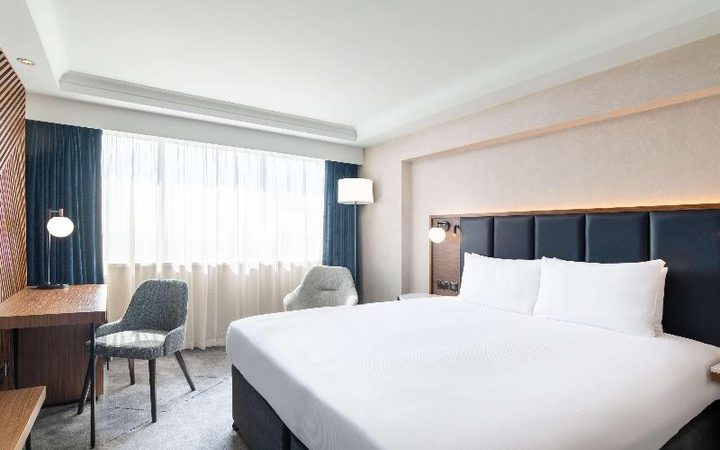


CS-R1Deluxe King RoomHotelbeds
DBL.DX-KGDouble Deluxe King
group 28Deluxe room
hotel gallerymatched by photo
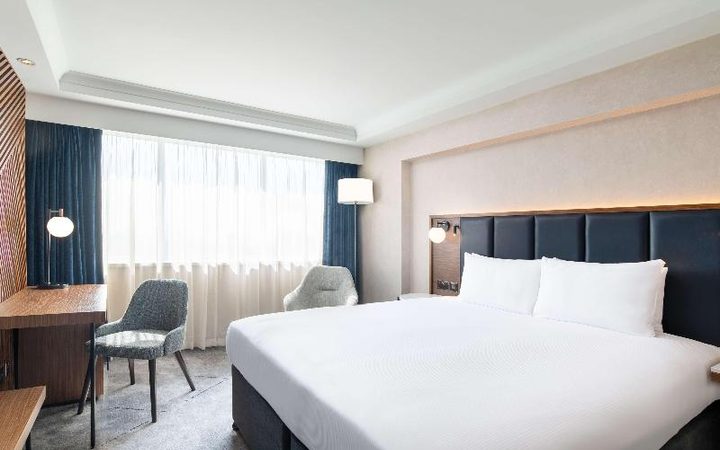
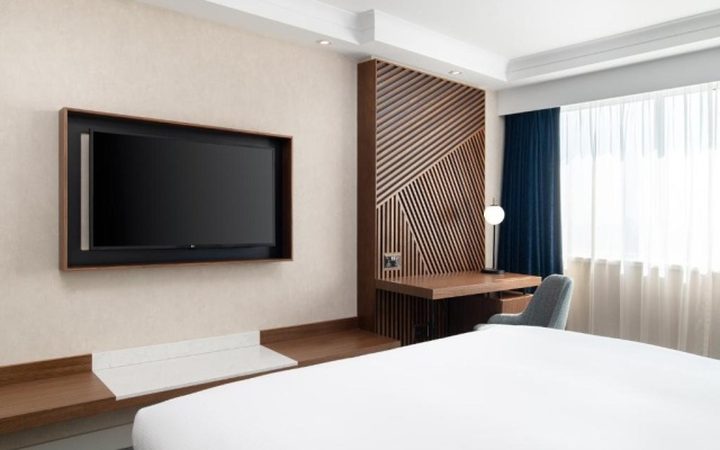

CS-R2Deluxe Double RoomHotelbeds
DBL.DX-1Double Deluxe, 1 bed
group 130Deluxe Double room (full double bed)
hotel gallerymatched by photo
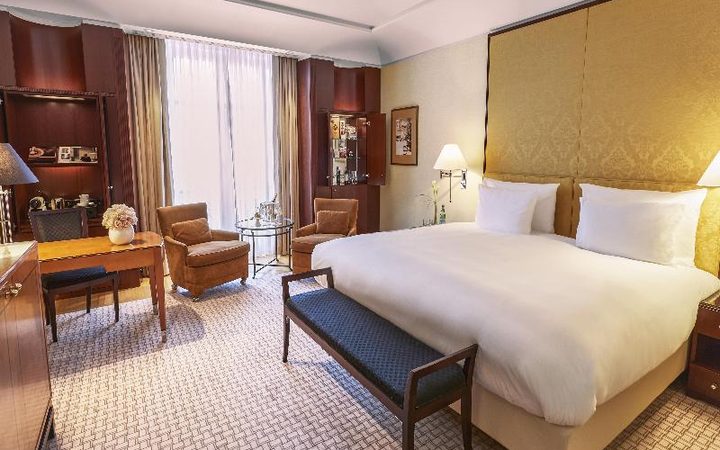


CS-R3Deluxe Double RoomHotelbeds
DBL.DXDouble Deluxe
group 100Deluxe Double room (full double bed)
hotel gallerymatched by photo



CS-R4Deluxe Suite, Brandenburg GateHotelbeds
SUI.DX-KGSuite Deluxe King
group 17871734Brandenburg Gate Deluxe Suite
hotel gallerymatched by photo
What you get
Every hotel gets a CS ID that is never reused. If two IDs turn out to be the same hotel, they are merged and the old ID points to the new one.
Look up a supplier's hotel code and get the same hotel's code at Hotelbeds, Wanderbeds, TBO Holidays and RateHawk. One code or thousands in a single bulk call.
Every city has its own ID and each supplier's city code, so you can search each supplier for the same destination. A search box endpoint finds cities and hotels by name.
Name, address, city, country, coordinates and star rating for every hotel, plus the photos, descriptions and facilities each supplier provides, all linked to one hotel record.
The engine matches on name, location, phone and address. Uncertain matches go to a review queue where a person decides, and every link shows whether a person confirmed it.
A changes feed shows what was linked, moved or removed since any date. A full export is made every night, and signed webhooks push changes to your server.
A REST API with keys, plans, per-minute and monthly limits, a usage report and clear error messages.
Quality reports, an issues list, matching rules with a guide, and a sandbox to test changes before they reach live data.
Watch
A narrated tour of the Corvix mapping module and how it helps the OTA, with a supplier directory and reference statistics. Interface screens show sample data and sensitive details are hidden. Reference statistics are industry figures.
Corvix is a hotel multicode and mapping module. It gives every hotel one permanent Corvix ID (a CS ID) and links it to the different codes that each supplier uses for the same property, so your platform shows each hotel once.
Corvix imports hotel files from your suppliers, matches each supplier record to a CS hotel, and keeps those links up to date. Doubtful matches go to a review queue where a person confirms or rejects them, and duplicates are merged into a single hotel. The result is one reliable reference for every hotel in your system.
Corvix compares hotels using several attributes together, such as name, address and location, and scores each match. Rules you control decide what is accepted automatically and what needs review. An algorithm sandbox lets you test how the matching behaves on sample hotels before you change anything.
Four suppliers are loaded today with real data, about 6.9 million supplier hotel records in total as of 5 November 2026: Hotelbeds, Wanderbeds (WebBeds), TBO Holidays and RateHawk. Corvix is built to map many more, set up per project, including: Stuba, Hotelston, Restel, Dida Travel, Booking.com, Expedia Rapid, Agoda, Trip.com, Priceline, Despegar, Traveloka, HyperGuest, DerbySoft, Marriott, Hilton, IHG, Accor, Hyatt, Amadeus, Sabre, Travelport, Duffel, Kiwi.com, Mystifly, PKFare, Seeru, TBO Flights, Travelpayouts, Google Flights, Kayak, Skyscanner, Lufthansa Group, British Airways, Air France-KLM, Emirates, Singapore Airlines, Virgin Atlantic, Avis Budget, Hertz, Sixt, Europcar, Rentalcars.com, Blacklane, Mozio, Trainline, Eurostar, Deutsche Bahn, SNCF Connect, National Rail, Omio, GetYourGuide, Klook, Viator / Tripadvisor, Tiqets, Allianz Global Assistance, Chubb, Cover-More, Zurich Travel, Google Places, Mapbox, HERE, OpenStreetMap.
Through a REST API with client keys and written API documentation, plus a changes feed, a nightly export and webhooks. Any system can use it, not just the Voya platform.
The CS ID, the mapped supplier codes, and standard hotel information: name, address, coordinates, photos, descriptions and facilities where the supplier provides them. Coverage depends on each supplier; in our current data, between about 68% and 93% of hotels have at least one photo.
Whenever new supplier files are imported. The changes feed tells your systems exactly which hotels were added, changed or merged, so you only fetch what moved.
IDs are permanent and never reused. If two turn out to be the same hotel, one is merged into the other and the API tells you which ID to use from then on.
The back office has a dashboard, supplier and batch-import screens, a mapping queue, a duplicate merge studio, a master catalogue search, rules, an algorithm sandbox, jobs, issues and API client management, so your team can manage large hotel files without touching the database.

Request a demo
Tell us a little about your business and we will reply by email.
Fill in the form and we will get back to you by email.